
Clavicle (collarbone) fracture
A clavicle (collarbone) fracture can cause sudden pain around the shoulder, swelling and difficulty moving your arm after a fall or direct impact. Although painful, most fractures heal well with the right treatment and rehabilitation. At Fortius Clinic, our shoulder specialists are here to help you return to everyday life with confidence. Together, we'll build a personalised treatment plan, clearly explain your options, and support you throughout your recovery. Early assessment can help confirm the type of fracture, identify any associated injuries and ensure you receive the most appropriate treatment from the outset.
What is a clavicle fracture?
The clavicle, commonly known as the collarbone, is the long bone that connects your breastbone (sternum) to your shoulder blade (scapula). It plays an important role in supporting the shoulder and allowing your arm to move freely. A clavicle fracture happens when this bone breaks, most commonly in its middle section. The injury is usually caused by a fall onto the shoulder or an outstretched hand, a direct blow during contact sport, or a cycling or road traffic accident. Clavicle fractures can affect anyone, but they are particularly common in active adults, cyclists, runners and people who play contact sports. Although many fractures heal well without surgery, some are more complex and may require specialist treatment. Prompt assessment helps determine whether the bone has remained in position and whether any nearby nerves or blood vessels have been affected.
What are the symptoms?
Symptoms can vary depending on the severity of the fracture, but commonly include:
- Pain over the collarbone that becomes worse with movement
- Difficulty lifting or moving the arm
- Swelling and bruising around the shoulder
- Tenderness over the fracture
- A shoulder that appears to droop downwards
- A visible bump or deformity over the collarbone
- A grinding or clicking sensation when attempting to move the shoulder
If you have severe pain, significant deformity or numbness, tingling or changes in circulation in your arm or hand, you should seek urgent medical attention.
How is it diagnosed?
Your consultant will begin by discussing how your injury happened, your symptoms and how they're affecting your everyday activities. They'll then examine your shoulder, assess your movement and carefully check the position of the collarbone.
To confirm the diagnosis, we may recommend:
- A detailed medical history
- Physical examination
- Assessment of shoulder movement
- X-rays to identify the fracture and assess its position
- CT scans if a more detailed assessment is needed, particularly for complex fractures
How is it treated?
Treatment depends on the type of fracture, whether the broken bone has moved out of position and your individual recovery goals.
Your consultant will explain your options clearly and recommend the treatment that's most appropriate for you.
Treatment may include:
- A sling to support the arm while the bone heals
- Pain relief to help keep you comfortable
- Physiotherapy to restore movement, strength and shoulder function
- Surgery if the fracture is significantly displaced, unstable or unlikely to heal successfully without an operation
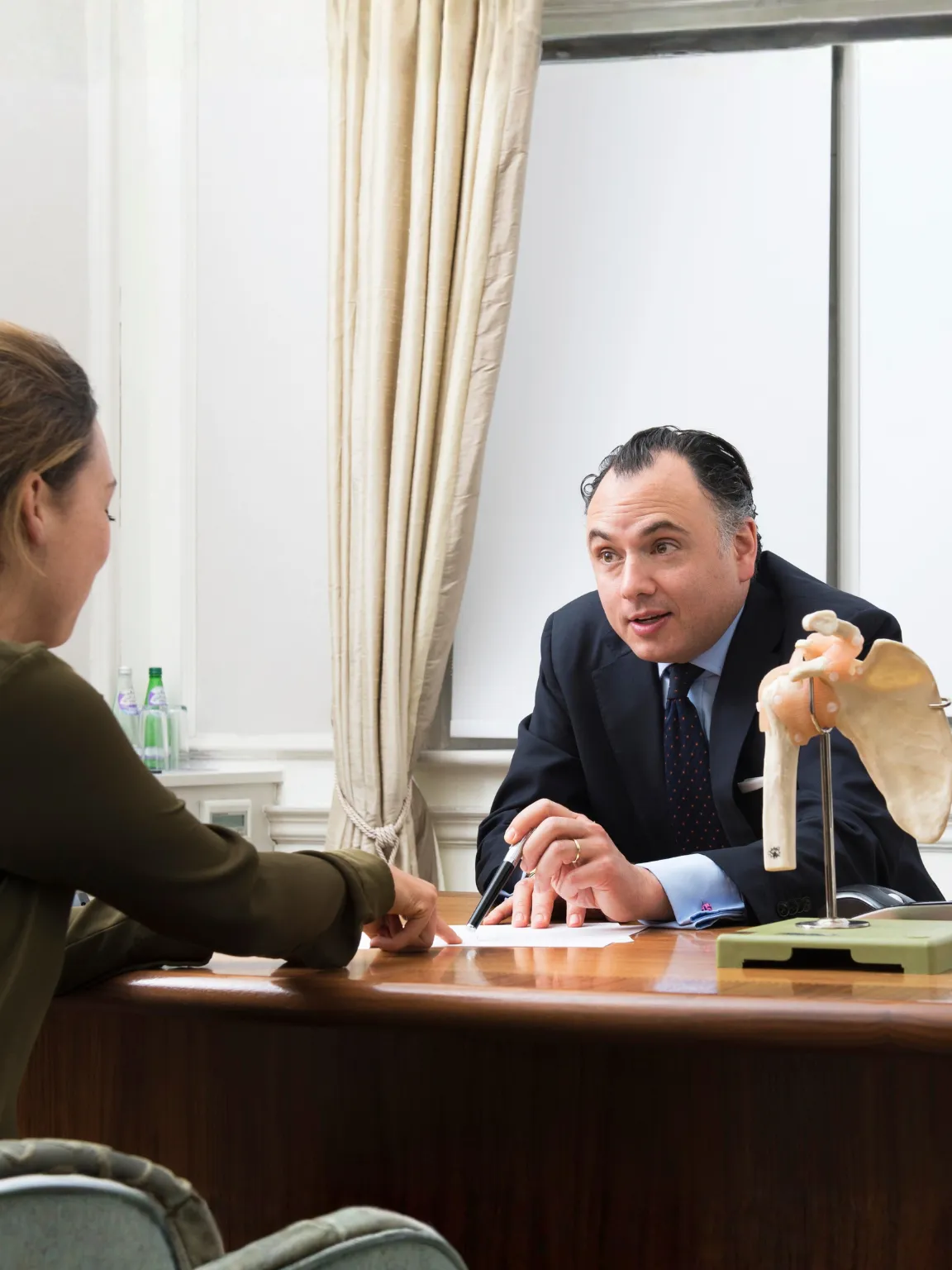
Treatment routes for clavicle fractures
Most clavicle fractures heal successfully without surgery.
Treatment usually involves wearing a sling for several weeks while the bone heals naturally, followed by a personalised rehabilitation programme. Physiotherapy helps restore shoulder movement, gradually rebuild strength and improve confidence using your arm again.
Your consultant will monitor your progress throughout your recovery and advise when it's safe to return to work, exercise and other everyday activities.
Recovery goals after clavicle fractures
During the first stage of recovery, rehabilitation focuses on:
Managing pain and swelling Protecting the healing bone Maintaining gentle movement where appropriate Preventing stiffness in the shoulder
As your fracture heals, rehabilitation aims to:
Restore shoulder movement Improve strength and stability Build confidence using your arm Return to normal daily activities
The final stage of rehabilitation focuses on:
Gradually returning to work, exercise or sport Rebuilding strength, coordination and endurance Improving shoulder control Reducing the risk of future injury Many people return to their usual daily activities within around three months, although recovery may take longer following more complex fractures or surgery.
Working with professionals and teams
Our shoulder specialists support professional athletes, sports teams, active individuals and people whose work places high demands on their shoulders. Working closely with radiologists, physiotherapists and the wider multidisciplinary team, they provide coordinated care from diagnosis through to rehabilitation, helping each person return safely to sport, work or everyday activities.
The same specialist expertise and collaborative approach are available to every patient, whatever your activity level or recovery goals.

Our Experts - Leaders in Shoulder Treatment









Clavicle fracture FAQs
Most clavicle fractures heal within 6 to 12 weeks, although it can take several months to regain full strength and shoulder function. Recovery depends on the severity of the fracture and whether surgery is required.
Not always. Many clavicle fractures heal successfully with a sling and physiotherapy. Surgery is generally only recommended if the bone is significantly displaced, unstable or unlikely to heal in a good position.
You should avoid forcing movement if you think you've broken your collarbone. Supporting your arm in a sling can help reduce pain until you've been assessed by a specialist.
You should only drive once you can safely control your vehicle and perform an emergency stop comfortably. If you're still wearing a sling or have significant pain or restricted movement, you should not drive.
Yes. Smoking and vaping can reduce blood flow and slow the body's natural bone healing process, increasing the risk of delayed healing and complications after surgery. Stopping smoking, even temporarily during your recovery, can significantly improve healing. If you'd like support to quit, speak to your GP or visit the NHS Quit Smoking website.
This depends on your injury and the type of sport you play. Low-impact activities can often be resumed once the bone has healed and your shoulder strength has returned. Contact sports should only be restarted when your consultant confirms it is safe to do so.