
UTS (ulnar tunnel syndrome) of the wrist
Pins and needles in your little and ring fingers can make your hand feel unreliable, particularly when you’re gripping or doing something fiddly.
What is UTS of the wrist?
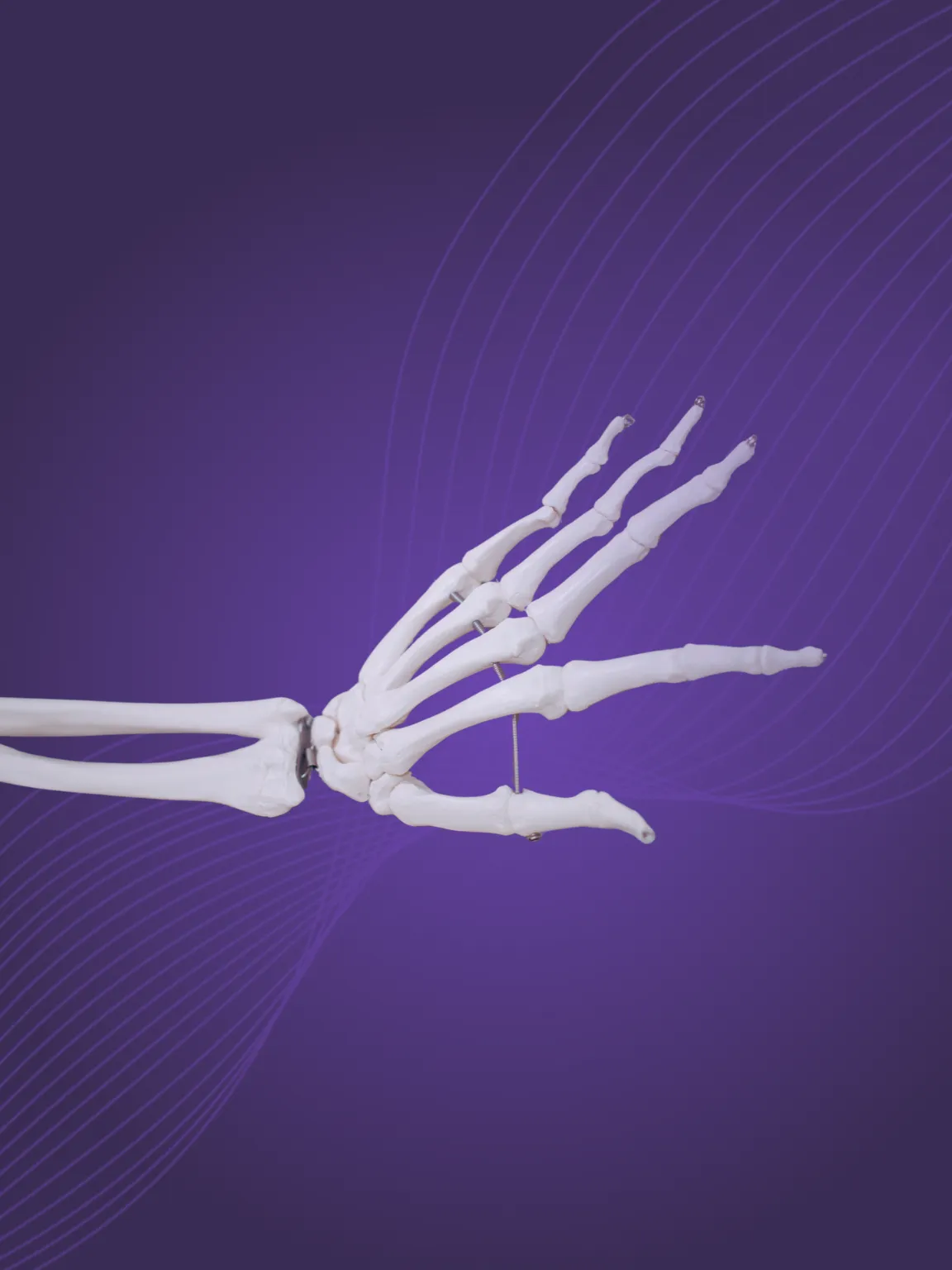
The ulnar nerve is one of the main nerves supplying your hand. It gives feeling to your little finger and part of your ring finger. It also helps control the muscles you use for gripping and pinching. The nerve travels from your neck into your arm before reaching a narrow passage on the palm side of your wrist. Ulnar tunnel syndrome develops when the nerve is squeezed inside this passage. This pressure can affect the signals travelling between your hand and brain. That’s why the condition can change how your fingers feel or weaken your grip.
What causes UTS of the wrist?
A common cause is a ganglion cyst. This harmless, fluid-filled lump can form beside the wrist joint and press against the nerve.
Repeated pressure on the palm can also be responsible. It may affect cyclists who lean heavily on their handlebars or people who regularly use vibrating tools.
Less commonly, the passage may naturally be narrow. Scar tissue or a small piece of bone left by an earlier injury can also take up space around the nerve.
What are the symptoms of UTS of the wrist?
Symptoms often come on gradually. You may notice numbness or pins and needles along the little-finger side of your hand.
You may also find that:
- Your grip feels weaker than usual (tasks such as opening a jar may take more effort)
- Pinching small objects becomes harder
- Your fingers feel less coordinated
- You experience aching around the wrist or palm
- The muscles in your hand look smaller (in more advanced cases)
The same nerve can be squeezed at the elbow, causing cubital tunnel syndrome. An assessment can show where the problem is coming from.
How is UTS of the wrist diagnosed?
Your specialist will ask which fingers feel different and when you notice the symptoms. They’ll check the feeling in your hand and see how strongly you can grip or pinch.
They’ll examine both your wrist and elbow because pressure at either point can affect the same fingers.
You may have a nerve test (nerve conduction study) to show how quickly messages are travelling into your hand. During the test, small pads placed on your skin send gentle electrical signals along the nerve. The results can help locate the pressure and show how well the nerve is working.
If something might be pressing on the nerve, an ultrasound or MRI scan can provide a better view. An X-ray may be helpful if your specialist suspects that a piece of bone is involved.
How is UTS of the wrist treated?
The best approach depends on what’s pressing against the nerve and how much your hand has been affected.
When repeated pressure is the cause, changing the activity may be enough to ease your symptoms. If a lump or a narrow passage is squeezing the nerve, surgery may be needed to create more room.
Your specialist will explain what they’ve found and what improvement you may realistically expect.
Treatment routes for UTS of the wrist
Treatment aims to relieve pressure on the nerve before it causes further changes to the feeling or strength in your hand.
You may be advised to change your hand position during activities that bring on symptoms. For cyclists, this could mean varying your grip or adjusting your handlebars. Padded gloves may also reduce pressure through the palm if you lift weights or play golf or tennis.
A wrist splint can keep your hand in a more comfortable position for a short time. Your specialist may also suggest pain relief, such as ibuprofen.
Exercises that help the nerve move through the wrist may be useful for some people. These should be chosen by your specialist or hand therapist so you know they’re right for you.
Recovery goals after UTS surgery
Phase 1 goals:
Keep your hand raised to limit swelling Leave your dressing in place as advised Keep the wound clean and dry Move your fingers gently if your specialist asked
Phase 2 goals:
Have your wound checked when advised Begin using your hand for light tasks Avoid heavy lifting or pressure through your palm Continue any recommended movement exercises
Phase 3 goals:
Gradually increase daily hand use Return to work or driving when it feels safe and your specialist agrees Rebuild strength with hand therapy if needed Wait for guidance before playing sports or using tools in the workplace
Working with Hand and Wrist professionals and teams
Our hand and wrist specialists support professional athletes, sports teams, active individuals and people whose work places high demands on their hands and wrists. Working closely with radiologists, physiotherapists and the wider multidisciplinary team, they provide coordinated care from diagnosis through to rehabilitation, helping each person return safely to sport, work or everyday activities.
The same specialist expertise and collaborative approach are available to every patient, whatever your activity level or recovery goals.

Our Experts - Leaders in Hand and Wrist treatment










How to pay
We offer flexible options depending on how you choose to access care at Fortius. Whichever option you choose, we’ll help make the process clear and straightforward from the start.
Private medical insurance
If your care is covered by private medical insurance, we’ll usually invoice your insurer directly. Please check your policy in advance and request an authorisation code if your insurer requires one. You’ll be responsible for paying any policy excess or costs that aren’t covered by your insurance.

Paying for yourself
You don’t need private medical insurance to access care at Fortius. If you’re paying for your own treatment, our team will explain the costs clearly and provide a personalised quote before you decide whether to go ahead.